Curriculum
Curriculum – The Longlands Way
Inspiring Excellence. Empowering Every Child.

Inspiring Excellence. Empowering Every Child.
At Longlands Primary School, we believe that every child deserves an exceptional education that prepares them not only for their next stage of learning, but for life beyond the classroom.
Our curriculum is ambitious, inclusive and carefully designed to ensure every child can succeed, regardless of their starting point. We place children and their learning at the heart of everything we do, creating opportunities that inspire curiosity, nurture creativity, develop resilience and build a lifelong love of learning.
Rooted in our values of Excellence, Empathy, Equality, Creativity and Integrity, our curriculum enables children to become confident, knowledgeable, articulate and compassionate young people who are ready to thrive in a changing world.
Know more. Remember more. Do more.
Through carefully planned learning experiences, rich vocabulary development, high-quality teaching and meaningful opportunities both inside and beyond the classroom, we empower every child to achieve their full potential.
Click on the subjects below to find out more











Curriculum Intent
Our aim is that every child leaves Longlands Primary School with the knowledge, skills, confidence and values needed to flourish in secondary school and beyond.
What do we want children to learn?
Our curriculum is designed to provide all pupils with the knowledge, skills and personal qualities they need to flourish both now and in the future.
We follow the National Curriculum and the Early Years Foundation Stage statutory framework, while carefully designing learning to meet the needs of our children and community. Educational success begins with secure foundations, so we give particular attention to:
- communication and language
- reading
- writing
- mathematics
- vocabulary development
- oracy and listening skills
- personal development
- executive function and self-regulation
- physical, social and emotional wellbeing
Knowledge is deliberately sequenced from Nursery to Year 6 so that learning builds progressively over time. Children revisit important concepts, strengthen their understanding and connect new learning with what they already know. Our aim is for pupils to retain important knowledge in their long-term memory and use it confidently in different contexts.
We are committed to an ambitious curriculum for all. Pupils with SEND, disadvantaged pupils and children facing additional barriers are supported to access the same broad curriculum. We adapt teaching, remove barriers and provide additional practice without lowering expectations.
Our curriculum also reflects the distinctive identity of Longlands and Market Drayton. The Longlands Gingerbread Literacy Project, our farm, allotment, orchard and Forest School create authentic experiences that deepen knowledge, enrich vocabulary and make learning meaningful and memorable.
Curriculum Implementation
How do we help children learn?
At Longlands, we know that great learning happens when important knowledge is taught clearly, practised successfully and revisited over time. Teachers identify what pupils need to know, sequence learning in manageable steps, model new knowledge and skills, and check understanding throughout lessons.
Our evidence-informed approaches include:
- explicit instruction and clear modelling
- Rosenshine’s Principles of Instruction
- Teach Like a Champion strategies
- retrieval and spaced practice
- deliberate practice and overlearning
- adaptive teaching
- oral rehearsal and structured talk
- metacognitive strategies that help pupils plan, monitor and evaluate their learning
Lessons routinely connect with prior learning. Teachers use questioning, mini whiteboards, partner talk, choral response, low-stakes checks and careful observation to identify misconceptions quickly. Feedback is timely, specific and actionable, with live feedback used wherever possible so pupils can improve during learning.
Reading at the heart of learning
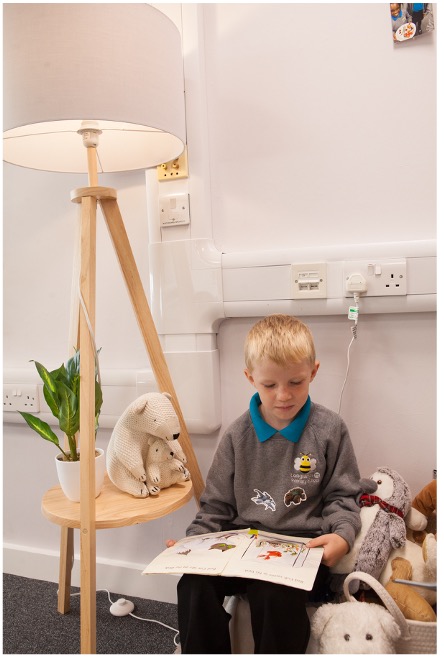
Reading is the gateway to the wider curriculum and sits at the centre of school life. Children begin their reading journey through Read Write Inc. Phonics, using closely matched decodable books to practise successfully at school and at home.
As pupils progress, they develop fluency, vocabulary and comprehension through guided reading, reading across the curriculum, independent reading and protected story time. Carefully selected books introduce children to rich language, varied perspectives, authors and genres. Adults read aloud regularly and model the pleasure, fluency and expression of accomplished readers.
Developing skilled and confident speakers and writers
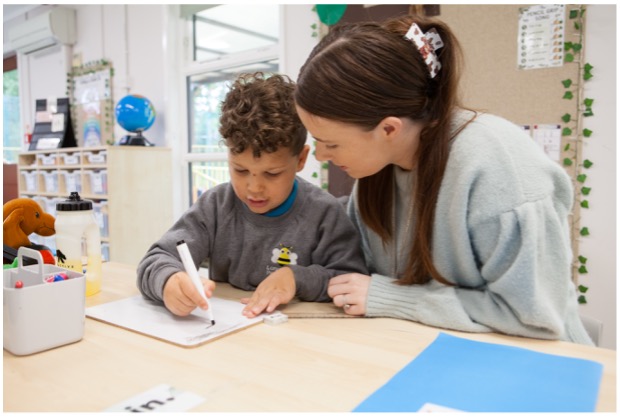
We believe children learn to write by first learning to talk, listen and organise their ideas. Oracy is embedded through partner talk, oral rehearsal, storytelling, discussion, debate, poetry, performance and presentation.
Writing is taught through a gradual release of responsibility: modelled writing, shared writing, guided practice and independent application. Handwriting, spelling, sentence construction, grammar, vocabulary and dictation are taught systematically so that transcription becomes increasingly fluent and pupils have greater cognitive space for composition.
Children learn to plan, draft, revise, edit and share their writing. They write for meaningful purposes and audiences, drawing on high-quality texts, first-hand experiences and secure subject knowledge.
Excellence in mathematics
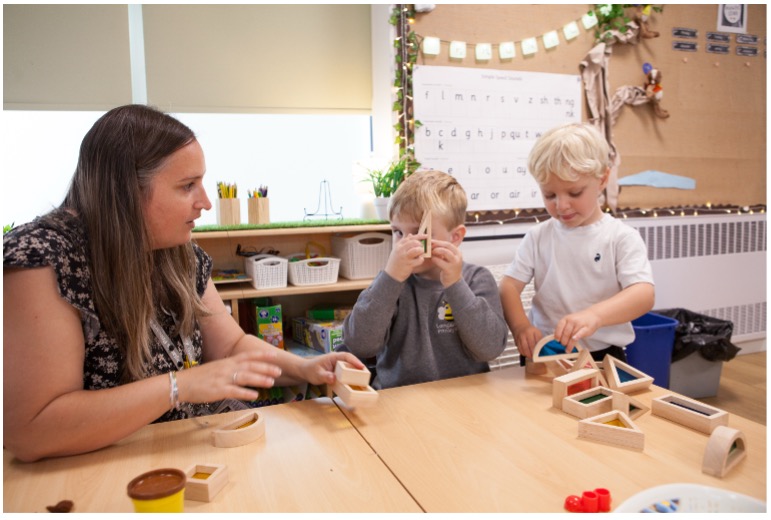
Our mathematics curriculum develops secure understanding, fluency, reasoning and problem-solving. Learning is sequenced in small steps, moving from prerequisite knowledge and carefully chosen representations towards independent application.
Children build automatic recall of essential number facts through daily retrieval and deliberate practice. Teachers model mathematical thinking, teach precise vocabulary and give every pupil opportunities to explain, justify and solve problems. Misconceptions are addressed promptly through additional teaching, same-day intervention and further guided practice.
Inclusion and belonging
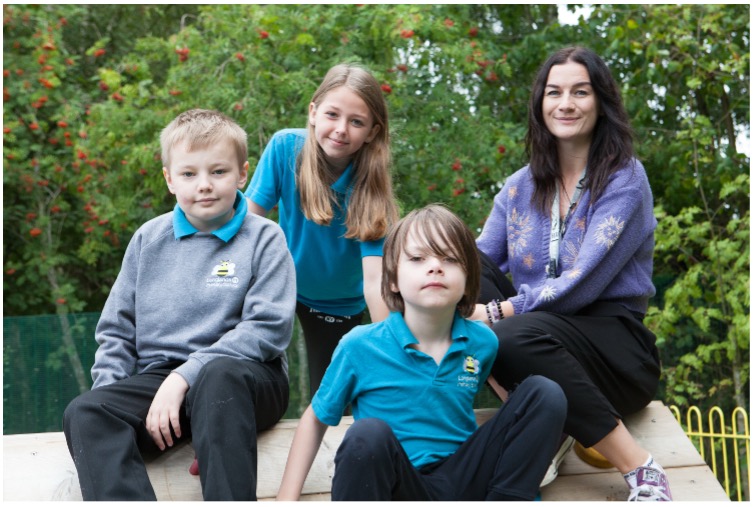
Inclusion is central to curriculum design and classroom practice. We identify needs early, make appropriate reasonable adjustments and use adaptive teaching so pupils can participate successfully and develop increasing independence.
Additional adults support access to high-quality teaching rather than replacing it. Scaffolds are selected carefully, reviewed regularly and reduced when pupils are ready. Targeted interventions are timely, purposeful and monitored for impact, helping pupils to keep up wherever possible.
Learning environments that support attention
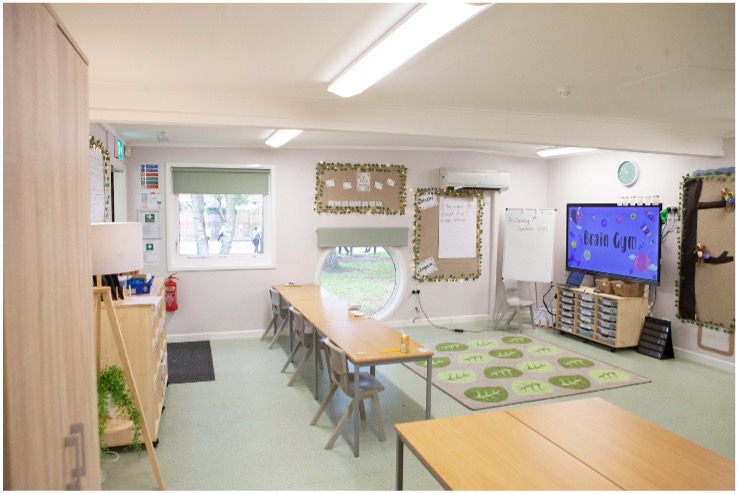
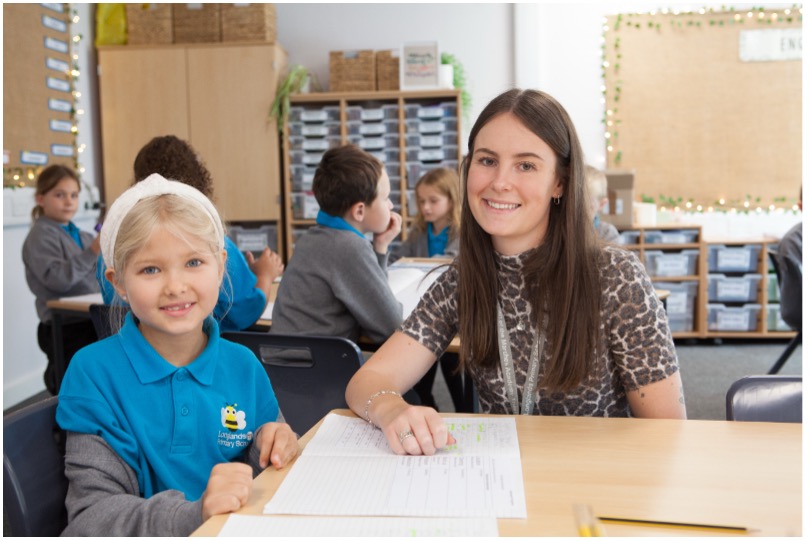
Our classrooms are calm, orderly and language-rich. Displays, working walls and resources are selected because they support current learning, vocabulary, independence and retrieval. Consistent routines create safe and predictable environments, reduce unnecessary cognitive load and maximise time for learning.
Learning Beyond the Classroom
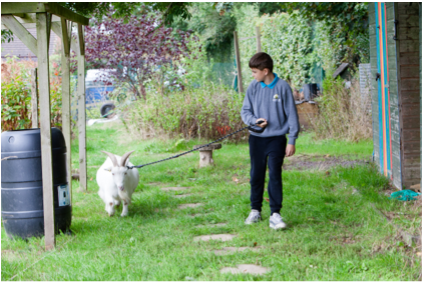
Outdoor learning is not an addition to our curriculum. It is part of how we help children learn, contribute and grow.
Learning at Longlands extends far beyond the classroom. Our outdoor provision is a distinctive and valued part of the curriculum, helping children connect knowledge with real experiences and develop responsibility, confidence and care for the natural world. In our Forest School children learn through exploration, practical challenge and managed risk. They develop resilience, independence, teamwork, creativity and problem-solving while deepening their understanding of the natural world. In the Longlands Farm, caring for animals develops responsibility, empathy and confidence. The farm creates meaningful links with science, geography, sustainability, wellbeing and personal development.
The Longlands Gingerbread Literacy Project
Our annual whole-school Gingerbread Literacy Project celebrates Market Drayton’s identity as the home of gingerbread. At the beginning of the Autumn term each year, from Nursery to Year 6, a shared storytelling tradition supports progression in language, oracy, reading and writing.
- oral storytelling and repeated high-quality language
- vocabulary development
- sentence construction and oral rehearsal
- reading, performance and poetry
- increasingly sophisticated writing structures
- local history, heritage and community connection
The project helps children see themselves as authors, performers, readers and storytellers while creating a coherent and memorable literacy journey through the school.
Preparing Children for Life
Academic learning is strengthened by a purposeful programme of personal development. Through educational visits, visitors, pupil leadership, enrichment, outdoor learning and community partnerships, children learn to:
- respect diversity and difference
- make informed choices
- stay safe, healthy and active
- communicate with confidence
- demonstrate empathy and integrity
- take responsibility and contribute positively
- develop ambition and aspiration
Curriculum Impact
What difference does our curriculum make?
The impact of our curriculum is seen in what children know, remember and can do, as well as in their confidence, curiosity, independence and character. Pupils develop the secure foundations and subject knowledge needed to learn successfully now and at the next stage of education.
We want children to leave Longlands as:
- fluent, motivated readers
- confident communicators
- skilled and increasingly independent writers
- fluent and thoughtful mathematicians
- curious learners with secure subject knowledge
- resilient problem-solvers
- respectful, compassionate and active citizens
- young people who demonstrate Excellence, Empathy, Equality, Creativity and Integrity
Pupils develop a rich vocabulary and learn to connect ideas across subjects. They can explain their thinking, apply their knowledge in different contexts and respond constructively to feedback. Regular retrieval, purposeful practice and carefully planned progression help important learning endure over time.
How we evaluate and improve the curriculum
Leaders and teachers continually evaluate how well the curriculum is working, particularly for pupils with SEND, disadvantaged pupils and those who need additional support. Evidence is considered together so that no single assessment or activity is viewed in isolation.
- ongoing formative assessment and regular checks for understanding
- termly assessment where appropriate
- pupil progress meetings
- work and book looks
- lesson drop-ins
- pupil voice
- subject leadership monitoring
- moderation and external quality assurance
- review of the impact of adaptations and interventions
This continuous cycle of assessment, reflection and professional development enables us to refine teaching, address barriers and strengthen curriculum delivery.
Find Out More
Detailed information about each subject, year-group expectations and curriculum progression can be found through the curriculum links on our website.
For further information about our curriculum, please contact the school office at [email protected].
Curriculum